





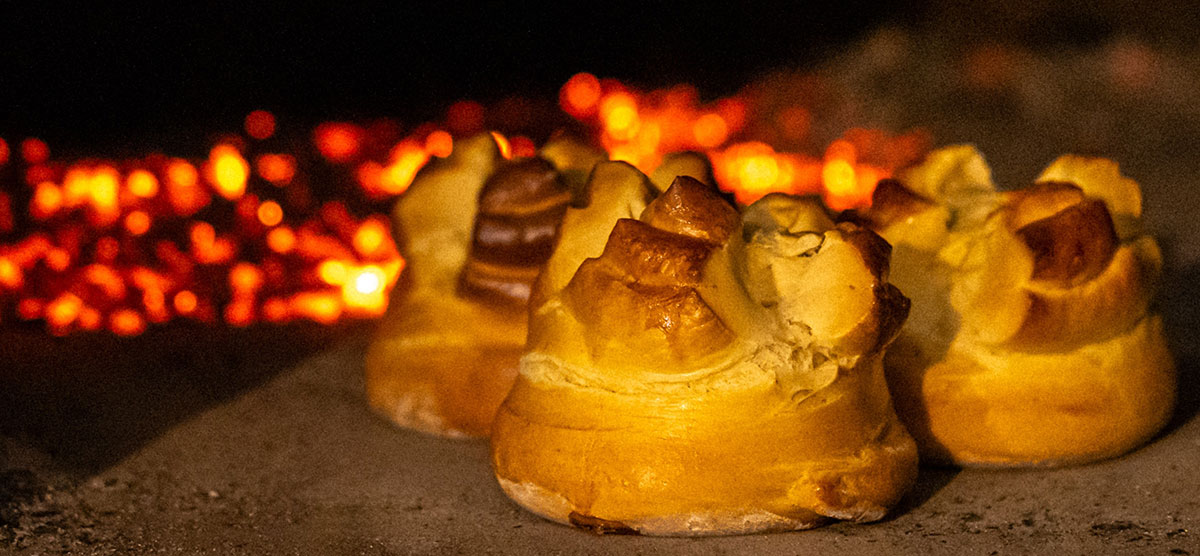
There are sweets that tell the story of a land. A Fogaça da Feira is one of them. A sweet bread with a rich dough and the unmistakable shape of the four towers of the Santa Maria da Feira Castle, This delicacy has come through five centuries of tradition and continues today to be one of the strongest identity symbols of the municipality - and of Portuguese gastronomy.
In this article you'll discover the history of fogaça, what makes its recipe unique, the tradition of Bonfire Festival and where to try it when you visit Santa Maria da Feira.
What is Fogaça da Feira
The Fogaça da Feira is a traditional sweet bread from Santa Maria da Feira whose shape stylises the castle's keep, with its four characteristic coruchéus. It's made with simple ingredients - wheat flour, eggs, sugar, butter, baker's yeast, water, cinnamon, coarse salt, lemon juice and zest - but has an unmistakable flavour that is both soft and slightly fragrant.
The secret, say the master pastry chefs, is in the prolonged leavening, It's a delicacy, with just the right touch of cinnamon and the way it's baked, with traditional skills that have been passed down from generation to generation. It's baked daily in several of the municipality's production centres, where it can be enjoyed while still hot.
Although it is the sweet symbol of Bonfire Festival, Celebrated on 20 January, fogaça is sold all year round, and those who visit Santa Maria da Feira almost always take one home - either personally or to send to family and friends, as tradition dictates.
Five centuries of history
The history of Fogaça da Feira is closely linked to the Bonfire Festival, This is one of the oldest festivities in Portugal - and perhaps the county's deepest identity.
In 1505, At a time when the plague was ravaging Europe, the people of Santa Maria da Feira made a solemn vow to Saint Sebastian: if the region was spared, they promised to hold an annual procession in his honour, offering him sweetbreads. The plague spared the land. The vow was fulfilled. And it was never broken again.
Legend has it that for four years the tradition was interrupted - and the plague returned. Since then, there have been more than 520 years, Every 20th January, the people of Feira fulfil their commitment in one of the most moving rituals in the traditional Portuguese calendar.
The Fogaceiras Festival: a living tradition
The 20th of January is municipal holiday in Santa Maria da Feira, and the highlight of the festival is the procession of the fiery girls - more than 250 girls, entirely dressed in white, In the evening, a group of people with colourful sashes around their waists made their way from the Town Hall to the Mother Church, carrying the fogaças of the vote on their heads, crowned with silver paper cut out to imitate the castle walls.
The day is divided into three main parts:
- Civic parade - leaving the Paços do Concelho, with the little fire girls, the three larger fires (the “three mandates”), the tray with wax candles, the miniature castle and the civil authorities.
- Solemn Mass with the blessing of the stoves, in the Mother Church of the Holy Spirit.
- Procession in the middle of the afternoon, bringing together the civic procession with the religious symbols - the image of the martyr St Sebastian stands out.
It's a party which mobilises families, schools, associations and volunteers from all over the municipality, and which extends - through the Portuguese communities - to cities such as Pretoria (South Africa), Rio de Janeiro (Brazil) and Caracas (Venezuela), where emigrant Feirenses recreate the celebration every year.
Fogaça Making Exhibition
Throughout January, Santa Maria da Feira celebrates fogaça with a rich cultural programme - exhibitions, concerts, workshops and educational initiatives. The gastronomic highlight is the Fogaça Making Exhibition, usually held at early January at the Castle, The event will feature traditional producers and local chefs demonstrating how fogaça is made and offering contemporary reinterpretations of the traditional pastry baked in the castle's oven.
It's a rare opportunity to see the production live, to taste different versions and to understand why UNESCO recognised Santa Maria da Feira as a Creative City in Gastronomy.
Where to try Fogaça da Feira
Fogaça is sold in traditional pastry shops and bakeries throughout the municipality, with daily production. We recommend it:
- Pastry shops in the historic centre - next to the parish church and the castle, they are the meeting point for those who want to try a freshly baked "fogaça".
- Traditionally built houses - some are open to the public and allow you to see the cooking process.
- Santa Maria da Feira Municipal Market - for those who prefer a more local and popular atmosphere.
Ask for recommendations at your hotel or accommodation - in Santa Maria da Feira, everyone has their favourite fogaça house and will be happy to share it.
How to recognise an authentic fogaça
A fogaça da Feira traditional is recognised by the following details:
- The format - four coruchéus that stylise the castle keep. Without this design, it's not a fogaça da Feira.
- The texture - fluffy dough, slightly moist on the inside, with a golden crust.
- The aroma - a discreet scent of cinnamon and lemon zest.
- The flavour - balanced, sweet but not cloying, with citrus notes at the end.
- The freshness - is best consumed the same day or the next day. It keeps well for a few days if stored in a cotton cloth.
A complete experience in Santa Maria da Feira
Tasting a "fogaça" in Santa Maria da Feira is more than a gastronomic experience - it's touching the soul of the land. To get the most out of your visit, we recommend combining them:
- Visit to Santa Maria da Feira Castle
- Stroll through Quinta do Castelo and historic centre
- Tasting fogaça in a traditional pastry shop
- Stay in a local hotel, ideally located just a few minutes from the castle
O Zen & Art - Charming Accommodation is in the heart of Santa Maria da Feira, just a few steps from the castle and traditional pastry shops. For those who want to Bonfire Festival on 20 January, or simply to discover the authentic flavours of the region, is the ideal starting point.
Book your stay and discover Santa Maria da Feira as it deserves to be discovered - without rushing, with time for a freshly baked stove.